
HCMUT HPC Summer School 2026 marked a small but meaningful milestone for Agentivium AI: it was the first public academic event in which our team participated.
The school was organized by the High Performance Computing Lab at HCMUT, together with the Faculty of Computer Science and Engineering, Big Data Club, student volunteers, technical supporters, and invited speakers from the broader HPC and computing community. Agentivium AI joined this collective effort in a modest role: sharing ideas, supporting selected technical activities, and contributing our perspective on agent-native systems and AI infrastructure.
Why this school mattered to us
Agentivium AI was founded around a simple belief: the next generation of AI systems will not be defined only by larger models, but also by how intelligently they use compute, tools, memory, infrastructure, and human oversight.
This belief is closely connected to high performance computing.
As AI systems become more agentic, they no longer run as a single prompt-response interaction. They may involve multiple agents, multiple tools, long-running workflows, retrieval systems, local and remote models, GPU-backed inference, and infrastructure-aware orchestration. In that setting, questions that are familiar to the HPC community become increasingly relevant to AI system design:
- How should compute be allocated?
- When should a task be parallelized?
- Which model is sufficient for a given step?
- How do we balance latency, cost, reliability, and quality?
- How do we make AI workflows reproducible, observable, and accountable?
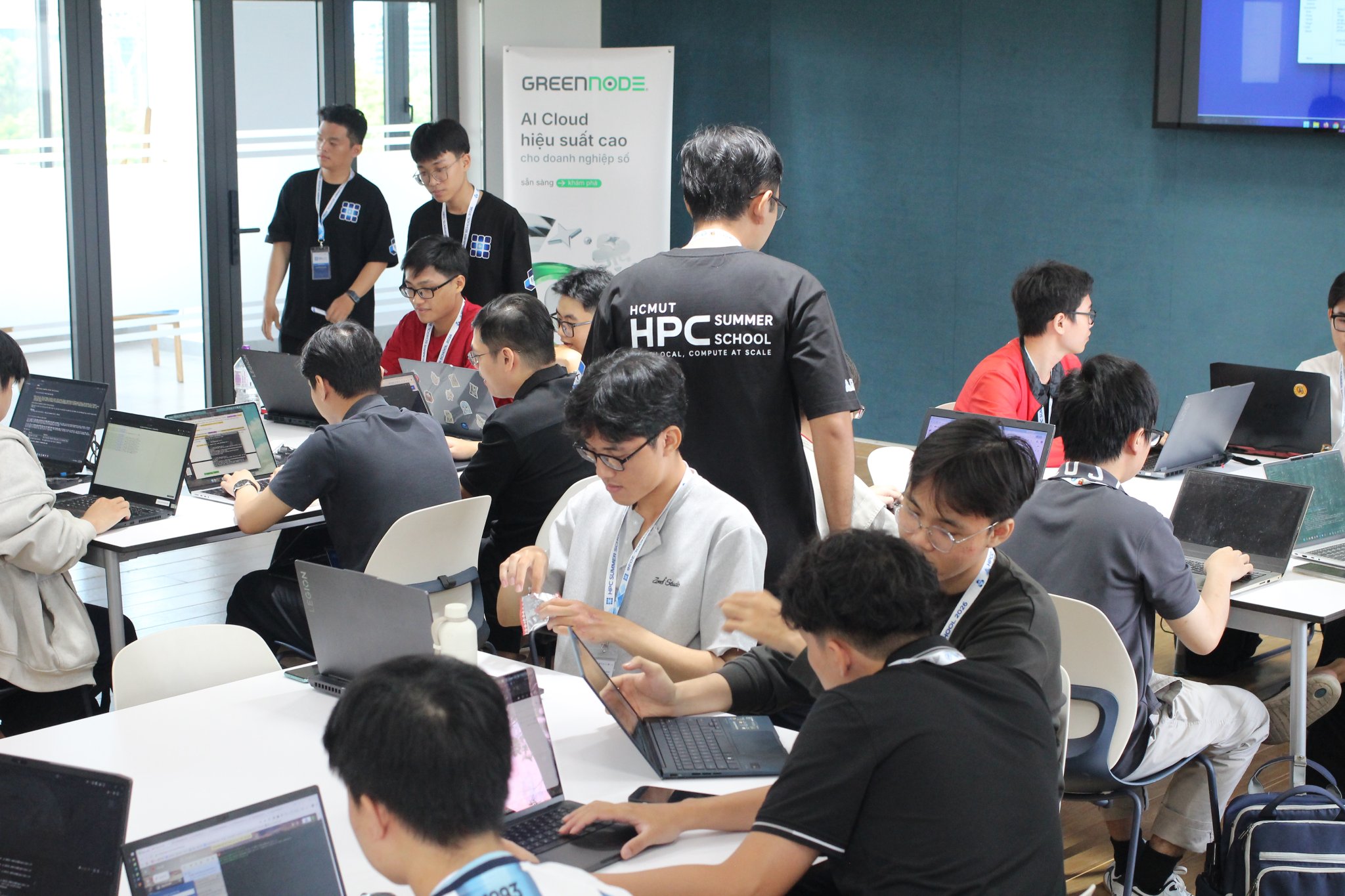
HCMUT HPC Summer School 2026 provided a valuable environment for students to encounter these questions through practical cluster usage, Slurm job management, reproducible environments, AI workloads, LLM serving, and a mini-hackathon.
What Agentivium AI contributed
Agentivium AI's participation was intentionally limited and supportive. The school was a broader HPCC/HCMUT community effort, and we were glad to contribute only where our current work could be useful.
Our main contributions were in three areas.
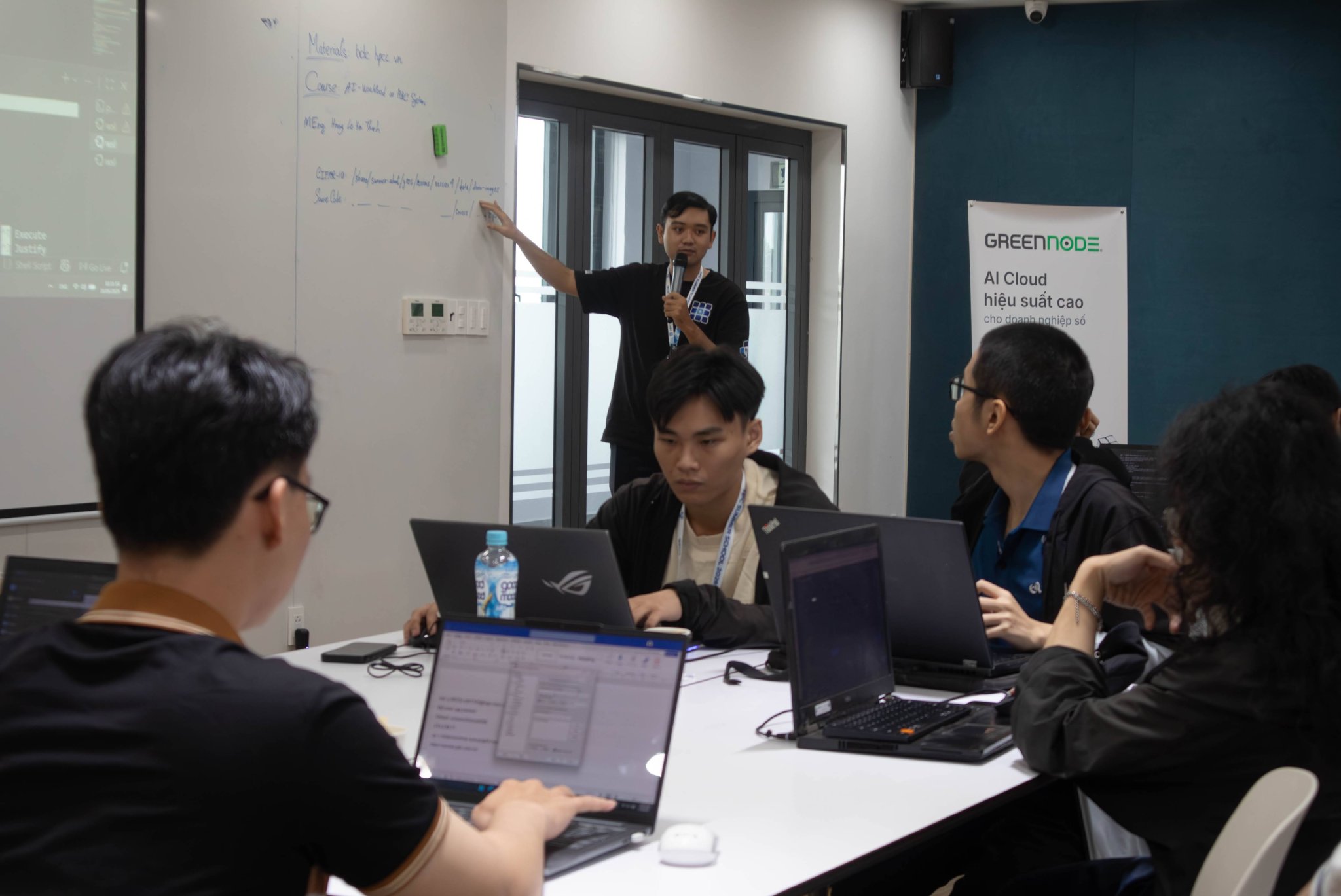
First, we shared ideas around agent-native systems and AI infrastructure. In the sessions on AI workloads and LLM serving, we discussed how modern AI applications increasingly depend on compute-aware execution rather than only model capability. This included the role of GPU resources, job scheduling, serving constraints, and multi-agent workflow design.
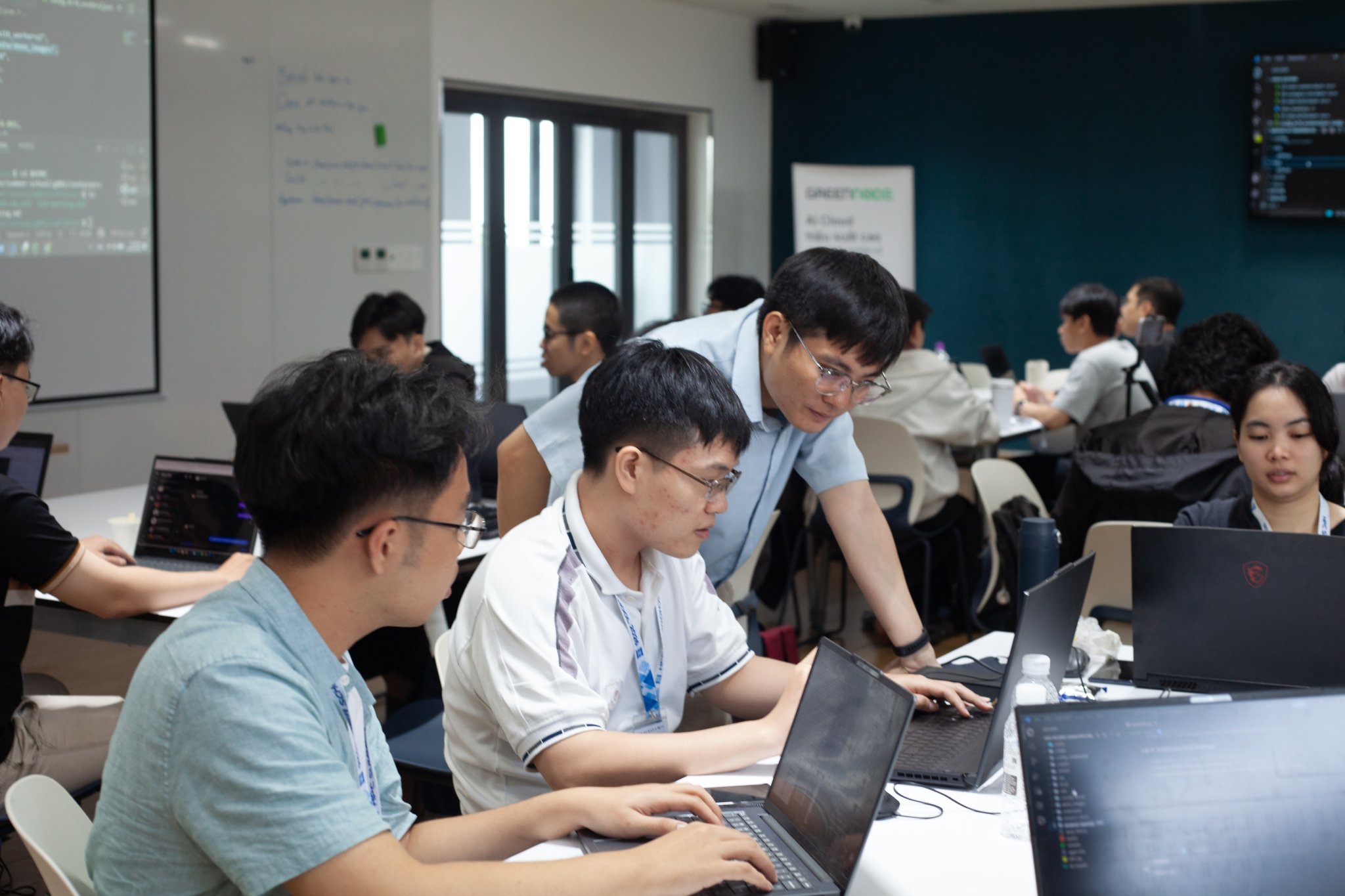
Second, we supported the technical framing of the mini-hackathon. The hackathon gave students a chance to think beyond a single-model workflow and explore how multiple LLM-based components could work together under resource constraints. This direction reflects one of our long-term interests at Agentivium AI: designing AI systems that are not only intelligent, but also infrastructure-aware.
Third, some members connected to Agentivium AI helped with teaching, mentoring, and student support. This was part of a much larger volunteer-driven effort involving HPCC members, Big Data Club, teaching assistants, technical supporters, and student organizers.
From HPC education to agent-native infrastructure
One of the most important lessons from the school is that AI education and HPC education are becoming harder to separate.
Students are interested in AI, deep learning, and LLM systems. But to build these systems responsibly, they also need to understand the infrastructure layer: how jobs are submitted, how GPU resources are requested, how containers support reproducibility, how performance is measured, and how shared compute environments are managed.
For Agentivium AI, this connection is central.
Agent-native systems should not be treated as abstract reasoning pipelines detached from infrastructure. They should be designed with explicit awareness of execution cost, resource availability, system reliability, and deployment constraints. A good agentic system is not only one that can reason; it is one that can reason within the limits of real compute environments.
HPC Summer School gave us a concrete educational setting to share this perspective with students, while also learning from the practical challenges of teaching these ideas in a short, hands-on format.
A first step, not a showcase
We see this event as a first step for Agentivium AI, not as a showcase of finished work.
The school helped us test how some of our ideas sound when introduced to students: compute-aware agents, LLM serving on shared infrastructure, multi-agent workflows, reproducible AI experiments, and resource-aware system design. It also reminded us that strong technical ideas need clear teaching materials, patient mentoring, reliable infrastructure, and a supportive community around them.
That community was the real strength of HCMUT HPC Summer School 2026.
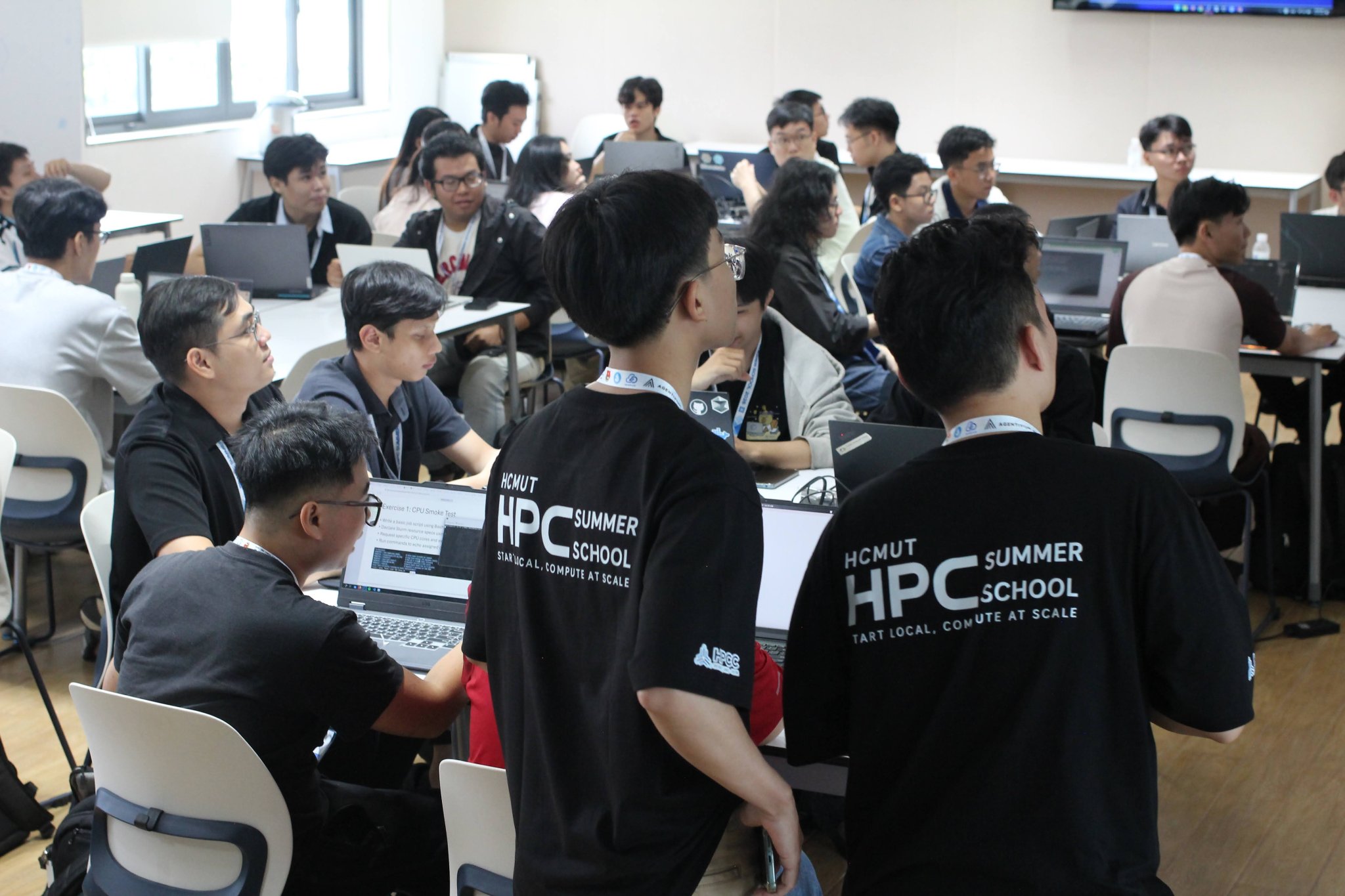
We are grateful to HPCC, the Faculty of Computer Science and Engineering, Big Data Club, the invited speakers, the teaching assistants, the student organizers, and all participants for making the school possible. Agentivium AI was glad to take part in this shared effort and to contribute a small piece to the growing HPC and AI infrastructure community at HCMUT.
As Agentivium AI continues developing its work on agent-native systems, this school will remain an important early reference point: a place where our ideas met students, infrastructure, constraints, and community practice for the first time.