
Introducing Agentivium AI: Why We Need Agent-Native Foundations
A systems perspective on treating agents as first-class computational workloads.
Their execution is no longer fixed before runtime.
Agents can choose tools, delegate work, and create new execution paths while running.
Context, memory, tool state, intermediate artifacts, and external environments continue to shape what happens next.
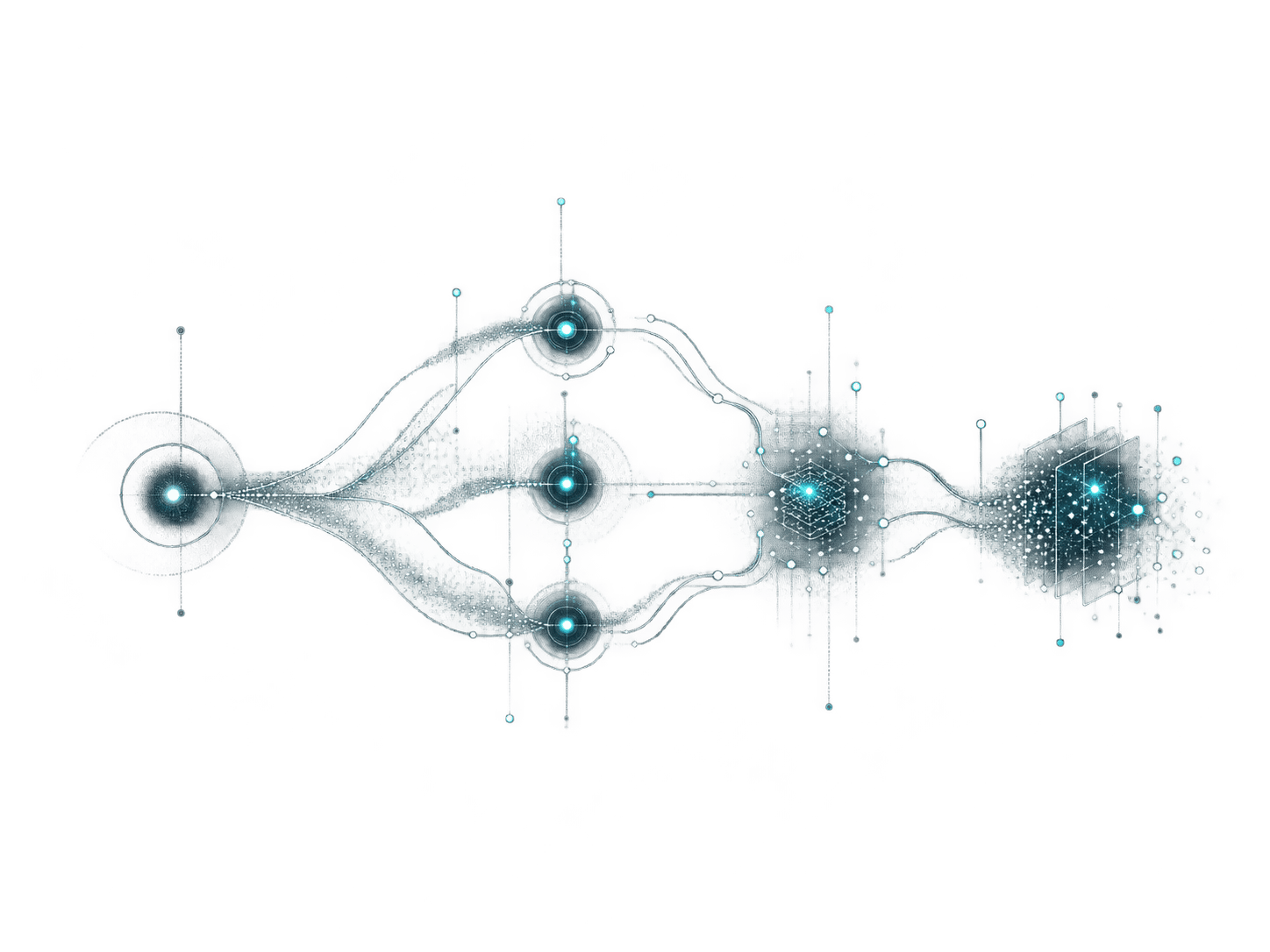
Models, compute, memory, tools, and budgets depend on decisions made during execution.
Schedulers, serving systems, and observability tools typically manage jobs, requests, models, or processes individually — not the evolving agent workflow as a first-class workload.
Current infrastructure knows how to reason about jobs, requests, and processes. It still lacks good workload representations for execution that can form, branch, remember, and adapt while running.
Operating systems, networks, schedulers, databases, and distributed runtimes already solve many related problems. Their assumptions, however, were made for a different kind of workload.
Retrofitting isolated components only goes so far when agents themselves are still treated as an afterthought rather than first-class entities in the system.
Concepts and analogies are useful only when they survive implementation, measurement, comparison, and reuse.
Scientific workflows are a demanding proving ground for the systems questions we care about: long-running execution, heterogeneous resources, scheduling constraints, intermediate state, and costly failures.
Current HPC systems still schedule jobs and resources — not evolving agent-native workflows.
Research notes, systems, and experiments that make the thesis concrete.
A systems perspective on treating agents as first-class computational workloads.
An infrastructure testbed for compute-aware orchestration of agentic workloads on HPC systems.
How models, compute, memory, tools, and budgets adapt as agent workloads evolve.
Explore the research, systems, and artifacts we are building around agent-native computing.
Google Sign-In uses basic identity information to authenticate your account and provide access to the services you choose.
Privacy Policy →